Pilot training successfully completed as the Erasmus+ Capacity Building in Vocational Education and Training (CB-VET) project enters its capitalisation phase, strengthening public-private partnerships, course recognition and long-term collaboration across diverse African innovation ecosystems.
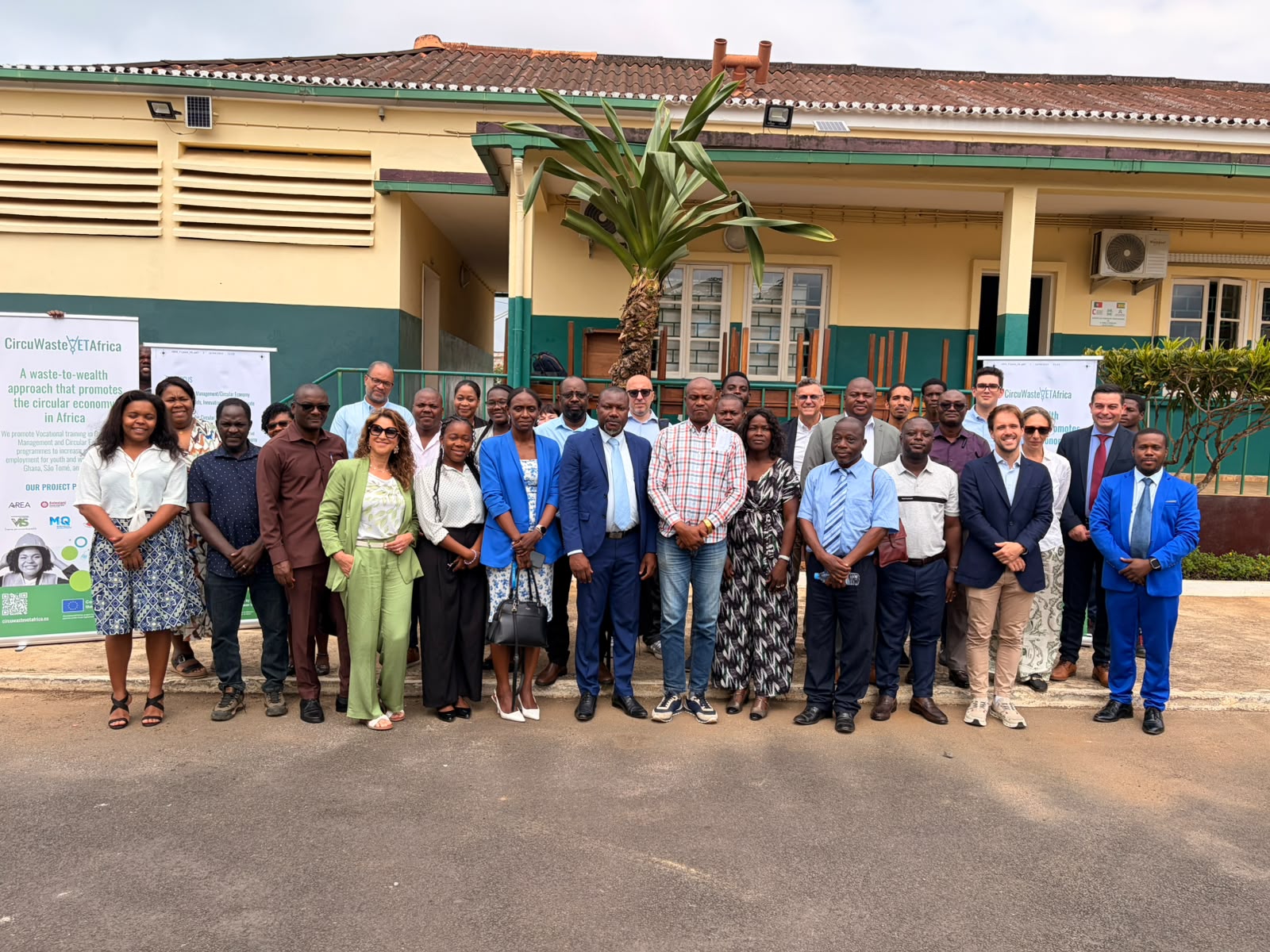
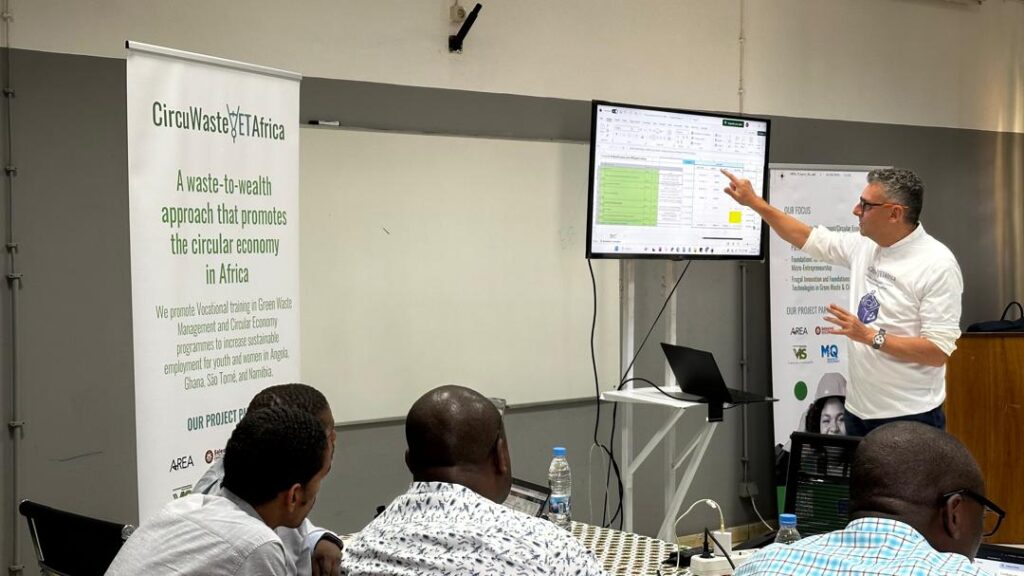
AREA successfully coordinated the latest CircuWasteVETAfrica consortium meeting and Capitalisation Workshop. CircuWasteVETAfrica is an Erasmus+ Capacity Building in Vocational Education and Training project co-funded by the European Union, bringing together partners from Italy, Spain, Portugal, Angola, Ghana, Namibia and São Tomé and Príncipe to strengthen green skills, employability and circular economy competencies through vocational education, stakeholder engagement and public-private collaboration.
Hosted by Milto Lima, Director of the Centro de Formação Profissional de São Tomé e Príncipe, the meeting marked the transition from successful completion of the pilot training phase towards capitalisation, course recognition and accreditation, and the establishment of sustainable partnerships capable of continuing beyond the project’s lifetime.
From Training to Long-term Impact
Partners reviewed progress across all work packages and focused on ensuring that the project’s results continue to create value after Erasmus+ funding. Discussions centred on public-private partnerships, recognition and accreditation of the developed training programmes, and the creation of long-term cooperation mechanisms between vocational education providers, municipalities, employers and public authorities. Stakeholders validated the Capitalisation Plans developed in Ghana, Angola, Namibia and São Tomé and Príncipe.
Smart Step eLearning Platform
A lasting legacy of the project is the multilingual learning content available through the Smart Step eLearning Platform, developed by the AREA team. The platform hosts the project’s digital learning resources and training materials, ensuring that learners, trainers and institutions can continue accessing the courses and supporting resources beyond the project’s duration, reinforcing the sustainability and wider uptake of the project results.
Building Bridges Across Ecosystems
One of the strongest outcomes of the meeting was the emergence of new collaboration opportunities between partners themselves. Countries that differ not only geographically but also in language, institutional structures, labour markets and innovation ecosystems are now exploring future joint initiatives. Experiences such as those shared by Swakopmund Municipality (Namibia) demonstrated how knowledge developed in one context can inspire practical solutions in another, creating new South–South and Europe–Africa collaborations.
Coordination Across Languages and Contexts
Coordinating CircuWasteVETAfrica required managing multiple countries, two working languages and very different educational and institutional realities. One of the principal challenges was ensuring effective collaboration between English- and Portuguese-speaking partners while maintaining coherence across the consortium.
To strengthen this process, AREA engaged Ms Catarina Pereira, an experienced Portuguese-speaking Project Manager, who facilitated communication, supported Portuguese-speaking partners and ensured inclusive participation throughout the project.
AREA’s coordination approach combined consistency with flexibility: ensuring coherence across work packages, respecting timelines and deliverables, fostering genuine partner co-creation, while allowing activities to be contextualised to local realities, including adapting training focus, stakeholder engagement approaches and learner profiles to each country’s needs.
Adriano Mauro, AREA Managing Director and Project’s Coordinator added One of the greatest strengths of CircuWasteVETAfrica has been our team’s ability to build a common methodology while respecting the diversity of each country. Coordination is not about making every partner work in the same way; it is about ensuring coherence, supporting co-creation, respecting shared timelines and, at the same time, giving partners the flexibility to adapt activities to their own realities, whether that means responding to different labour market needs, different stakeholder ecosystems or different student profiles. Seeing partners now creating new collaboration opportunities with one another across countries and ecosystems is one of the strongest indicators that the project has achieved something that will last beyond its formal duration.
Stakeholder Engagement
The Capitalisation Workshop gathered ministries, municipalities, TVET institutions, companies, NGOs and civil society organisations. Online stakeholders from Angola included representatives of EPAL, ENVIROBAC, EcoAngola, Expertise France and Centro de Formação Profissional Dom Bosco in Benguela, demonstrating growing regional interest in the project’s results.
Reflection on São Tomé and Príncipe
Although São Tomé and Príncipe is one of Africa’s smallest island states, participants were impressed by the professionalism of its institutions, the strong engagement of local stakeholders and the collaborative spirit demonstrated throughout the event. Discussions highlighted the country’s significant potential to build on its strengths in tourism, agriculture and environmental sustainability while further developing circular economy initiatives through vocational education and international cooperation. As Adriano Mauro shared during the workshop: As CircuWasteVETAfrica approaches its final phase, the consortium is no longer focused solely on delivering project outputs. Its priority is to ensure that the knowledge, partnerships and trust built over the past two years continue generating opportunities for vocational education providers, employers, municipalities and communities across Africa. By connecting diverse ecosystems, fostering co-creation and supporting locally adapted solutions, the project is laying the foundations for a greener, more collaborative and more resilient future for circular economy skills development.
Looking Ahead
As CircuWasteVETAfrica enters its final implementation phase, the consortium will focus on embedding the project’s results through recognised training programmes, sustainable public-private partnerships and continued cooperation between institutions across Africa and Europe. The project’s greatest legacy is not only its training materials, but the network of trusted relationships and collaborative ecosystems it has created.